
A perspective piece from The Listening Market
There was a time when the brand with the biggest advertising budget won. That was the rule, more or less, for as long as anyone in marketing could remember. Television spots, billboard campaigns, magazine spreads, and later, targeted digital ads. Whoever could afford to shout the loudest, longest, and most frequently would capture the market. It was a simple equation, and it worked because consumers had limited options and limited information. But the ground beneath that equation has been shifting for years, and in 2026, it has cracked open entirely.
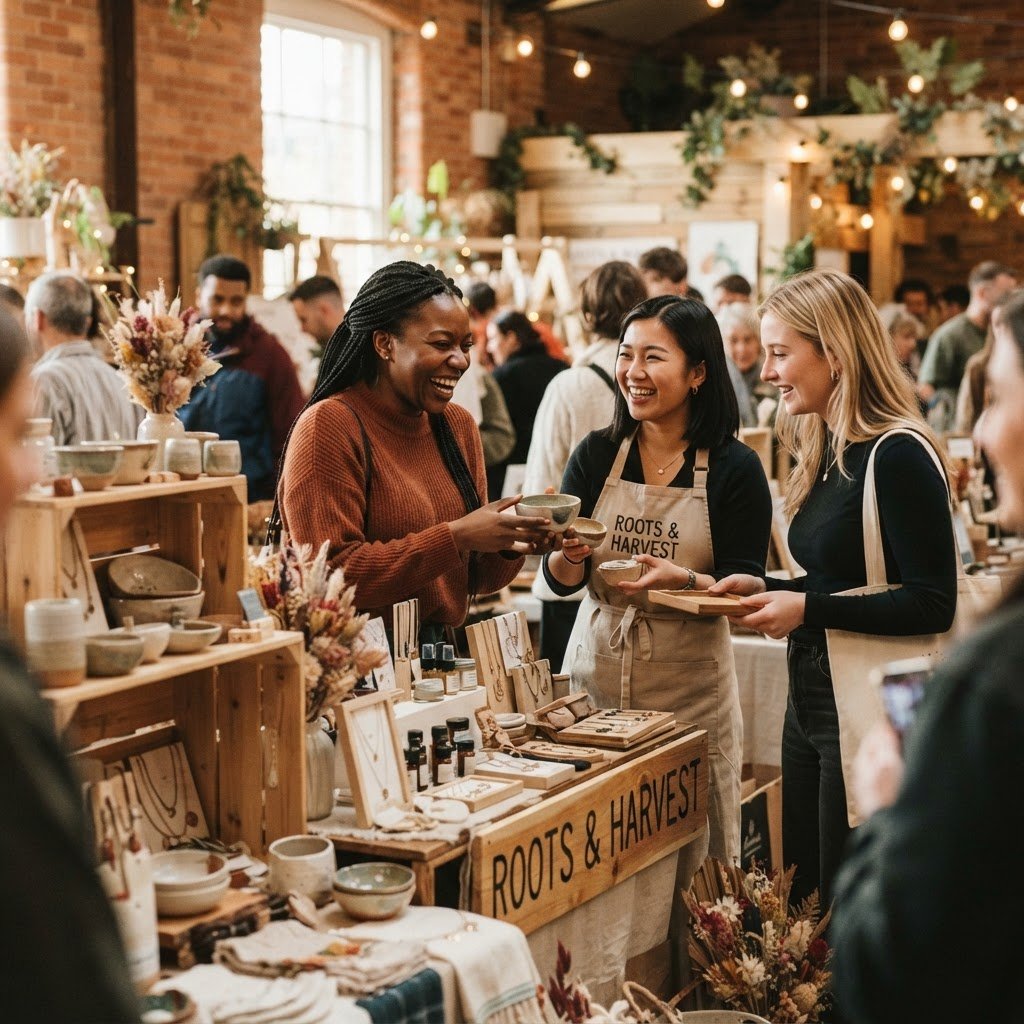
Community-led brands are outmarketing their big budget competitors, and they are doing it without multimillion-dollar ad campaigns. They are doing it through something that money cannot fake and algorithms cannot replicate: genuine human connection. These are brands that have grown not by broadcasting at audiences but by building spaces where people want to belong. They are the coffee roasters who know their customers by name, the skincare labels that started as forum recommendations, the clothing companies that grew out of group chats and mutual friends. And in 2026, they are the ones setting the agenda.
The mechanics of this shift are worth understanding because they reveal something fundamental about how consumer trust has changed. Traditional advertising works on a model of repetition and reach. Show the message enough times to enough people, and some percentage will convert. It is a numbers game, and it is effective when the numbers are big enough. But the numbers game has become expensive, and the returns have been shrinking. Ad fatigue is real. Consumers are saturated with messaging, sceptical of sponsored content, and increasingly skilled at tuning out anything that feels like a pitch. The cost of acquiring a customer through paid channels has been climbing year over year, and in 2026, it has reached a point where even well-funded brands are questioning the economics.
Community-led brands operate on a different model entirely. Instead of paying to reach strangers, they cultivate relationships that turn customers into advocates. A community-led brand does not need to spend thousands on a sponsored Instagram post because its customers are already posting about it organically. They do not need to hire an influencer because their community members are the influencers. Word of mouth, which has always been the most effective form of marketing, happens naturally when people feel genuinely connected to a brand and its story.
The rise of these brands has been accelerated by several converging trends. Social media platforms have evolved from broadcasting tools into community spaces. Discord servers, private Facebook groups, and Slack channels have become the new town squares where people gather around shared interests. A niche brand that serves a specific community can find its audience without ever spending on advertising, because the audience is already gathered somewhere, talking about the things they care about. The brand just needs to show up authentically and contribute something of value.
Authenticity is the word that gets thrown around, and it has almost lost meaning through overuse, but it is the core of what makes community-led brands work. Consumers in 2026 are extraordinarily good at detecting when a brand is performing versus when it is genuine. They can tell the difference between a company that started a community because it wanted to sell things and one that started selling things because a community already existed. The latter feels organic, and people want to support it. The former feels manipulative, and people walk away. This is why so many big brands struggle with community building. They approach it as a marketing channel, something to be optimised and scaled, and the community can feel the transactional energy underneath.
The brands that are winning understand something that their larger competitors often miss: community is not a channel. It is a relationship. And relationships cannot be scaled the way ad spend can. A community-led brand might have ten thousand customers instead of ten million, but those ten thousand customers are deeply loyal, highly engaged, and eager to bring others in. The lifetime value of a community member is astronomically higher than the lifetime value of a customer acquired through an ad. They buy more, they stay longer, they refer friends, and they forgive mistakes. That last point matters more than people realise. When a big brand makes a mistake, the internet piles on. When a community-led brand makes a mistake, the community rallies around it.
Small business owners have been the primary beneficiaries of this shift, and it has levelled the playing field in ways that were hard to imagine a decade ago. A one-person skincare brand operating out of a home studio can compete with a multinational cosmetics company, not by matching its ad budget, but by building a community that cares. The tools to do this have become accessible. Setting up a community space, creating content that resonates, and fostering genuine connections does not require a marketing department. It requires time, sincerity, and a willingness to show up consistently as a real person rather than a corporate entity.
The data supports what is happening on the ground. Studies tracking brand growth in 2026 show that community-led brands are achieving customer acquisition costs that are a fraction of their paid-marketing competitors. Their organic reach, driven by user-generated content and word of mouth, outperforms paid campaigns in engagement and conversion. And their customer retention rates are significantly higher, because the community provides ongoing value that goes beyond the product itself. People do not just buy from a community-led brand. They belong to it.
This does not mean big brands are doomed. Some have recognised the shift and are investing genuinely in community building, though it requires a cultural change that many find difficult. It means approaching marketing not as a department that pushes messages outward, but as a practice of listening, responding, and creating value for the people who already care. The brands that do this well, regardless of size, are the ones that will thrive. The ones that continue to treat community as just another marketing channel will find their budgets buying less and less.
There is something quietly revolutionary about all of this. For decades, the assumption has been that money buys attention, and attention buys market share. Community-led brands are proving that attention earned through genuine connection is worth more than attention bought through advertising. They are rewriting the rules of how brands grow, and they are doing it not with bigger budgets but with deeper relationships.
The future of marketing may well look less like a billboard and more like a conversation. And the brands that learn to have those conversations, honestly and consistently, will be the ones that endure. In 2026, community is not a buzzword. It is a competitive advantage. And the brands that understand this are already winning.




