
A perspective piece from The Listening Market
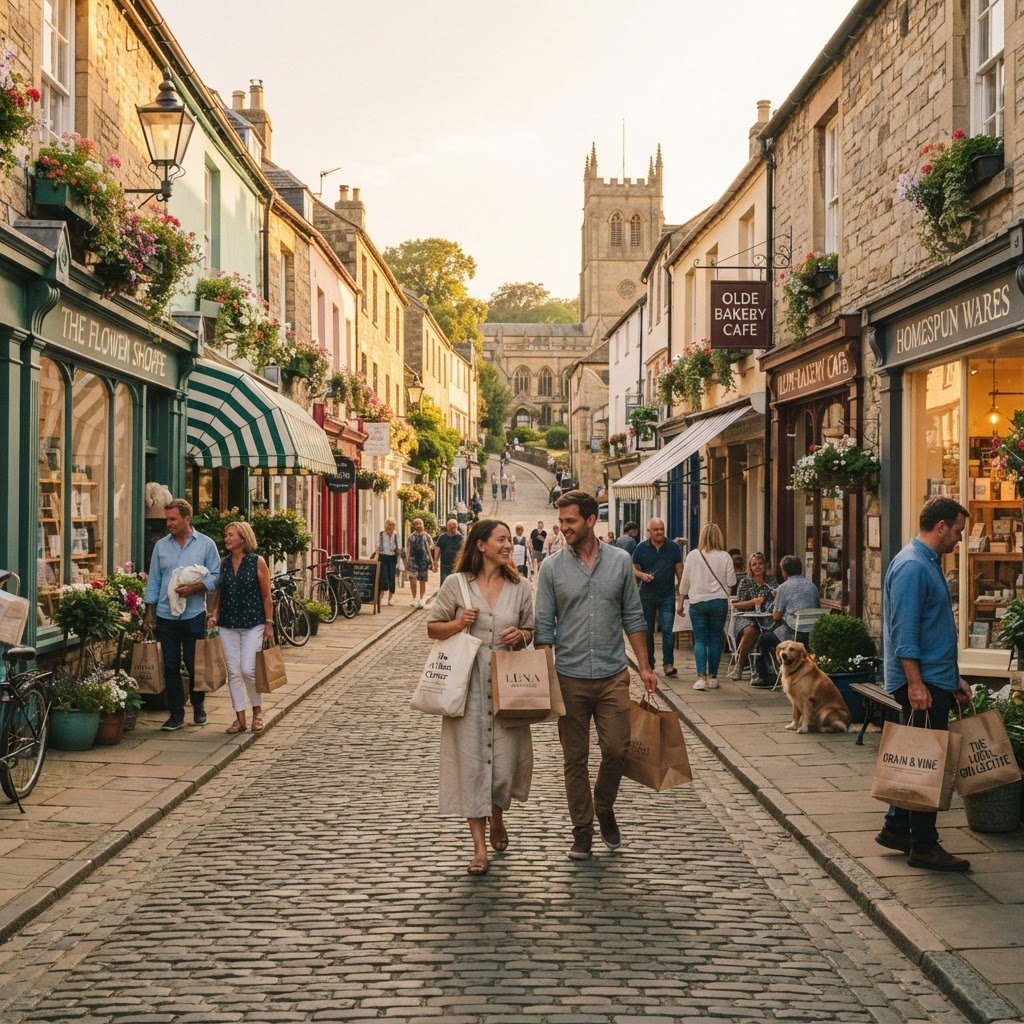
There is a particular feeling that comes from walking into a shop where the person behind the counter knows your name, remembers what you bought last time, and asks how your family is doing. It is a feeling that, for a long stretch of recent history, seemed destined for extinction. The rise of online retail, the dominance of megastores, and the relentless convenience of one-click shopping pushed the local high street to the edge. For years, the narrative was straightforward and grim: local shops were dying, and nothing was going to save them. But in 2026, that narrative has been quietly rewritten. More people are choosing to shop local, and they are doing it for reasons that go far beyond sentimentality.
The shift is not driven by a single factor but by a convergence of changes in how people think about money, community, and the kind of world they want to live in. It is easy to assume that shopping local is simply a matter of ethics or nostalgia, but the reality is more practical and more interesting than that. People are choosing local shops because those shops are offering something the giants of e-commerce cannot: a sense of place, a sense of connection, and increasingly, a standard of quality and service that stands out in an era of mass-produced everything.
Sustainability has played a significant role in changing consumer behaviour. The environmental cost of global supply chains, with their packaging, shipping, and carbon footprints, has become impossible to ignore. Every overnight delivery, every cardboard box, every item that travels halfway across the world before landing on a doorstep carries a cost that someone, somewhere, is paying. More people are factoring that cost into their purchasing decisions, and shopping local is one of the simplest ways to reduce it. A loaf of bread from the bakery three streets away does not need a shipping container. A piece of furniture from a local maker does not need to cross an ocean. These are small choices, but they add up, and in 2026, enough people are making them to create a visible shift.
Quality is another driver, and perhaps a more surprising one. For a long time, the appeal of large retailers was price and convenience, and local shops competed on neither. But something has changed in the last few years. The race to the bottom on price has produced a generation of products that are cheap, disposable, and ultimately unsatisfying. Clothing that falls apart after three washes, furniture that wobbles within a year, tools that break on the second use. People are tiring of the cycle of buying cheap, replacing, and buying again. Local shops, many of which stock handmade, locally sourced, or carefully selected products, are offering an alternative. The price may be higher, but the product lasts longer, works better, and feels more considered. The value proposition is different, and an increasing number of consumers are deciding it is worth the difference.
There is also a social dimension to this shift that should not be underestimated. The pandemic years were profoundly isolating, and their aftereffects are still being felt. People lost touch with the casual, incidental social contact that comes from being a regular somewhere. The barista who knows your order, the butcher who recommends a cut you would never have chosen yourself, the bookshop owner who sets aside a novel because they thought you would like it. These are small interactions, but they are the fabric of community life, and their absence left a gap that online shopping, for all its convenience, could never fill. Shopping local is, for many people, a way of rebuilding that fabric. It is not just about what you buy but about who you see and how you feel when you are out in the world.
The economic argument has also become more compelling as people have become more aware of how money flows through their communities. When a person spends money at a locally owned business, a significantly larger portion of that money stays in the local economy compared to money spent at a chain store or online retailer. Local businesses hire local people, pay local taxes, use local services, and often support local causes. The multiplier effect is real and measurable, and communities that have leaned into local shopping have seen it play out in tangible ways: better funded schools, more vibrant high streets, and a stronger sense of civic identity. The phrase “vote with your wallet” has taken on a literal meaning for people who see their purchasing choices as a form of civic participation.
Technology has played a paradoxical role in all of this. The same digital tools that enabled the dominance of online retail are now helping local shops compete. Social media allows a small business to reach customers that would never have walked past its door. Local delivery apps make it possible for a neighbourhood butcher or greengrocer to offer the same convenience as a supermarket. Online directories and community marketplaces help people discover local options they did not know existed. The digital and the local, once seen as opposing forces, are finding ways to work together, and the result is a local shopping experience that is more accessible than it has been in decades.
Younger consumers deserve particular credit for this shift. The stereotype of Millennials and Gen Z as digital natives who live entirely online has always been reductive. In practice, these generations are the ones most likely to research a product’s origins, to care about the ethics of a supply chain, and to seek out independent shops over chains. They are also the generation most likely to share their local discoveries online, creating a word-of-mouth effect that amplifies the reach of small businesses far beyond their immediate neighbourhood. A cafe that opens on a quiet side street can become a destination if the right person posts about it, and that kind of organic discovery is something big retailers cannot manufacture.
There are challenges, of course. Local shops still struggle with costs, rent, and competition. The playing field is not level, and it probably never will be. But the cultural tide is turning. More people are making a conscious choice to redirect at least some of their spending toward local businesses, and that choice is reshaping high streets, neighbourhoods, and the relationship between consumers and the places they live. The question is no longer whether local shopping will survive. It is how much of the retail landscape it will reclaim.
In the end, shopping local is not really about shopping at all. It is about the kind of world people want to inhabit. A world with thriving high streets and independent shops is a world with more character, more connection, and more resilience. It is a world where money circulates within communities rather than draining out of them. It is a world where the person who sells you your bread knows your name. And in 2026, that world is starting to feel less like a nostalgic fantasy and more like an achievable goal. One purchase at a time, people are building it.




