
A perspective piece from The Listening Market
A sold-out stadium fills with strangers who have nothing in common except a shared anticipation. A comedy club audience leans forward in the dark, waiting for the comedian to step on stage. A small theatre in a suburban strip mall hosts a play performed for fewer than a hundred people, and every seat is occupied. In an age when every film, song, and show is available instantly, on a screen, for a monthly fee, the most valuable thing in entertainment is increasingly the thing that cannot be streamed.
The rise of live experiences is not a backlash against digital entertainment. It is a complement to it. The same people who spend hours scrolling through streaming libraries will pay handsomely to sit in a room with other human beings and watch something happen in real time. The explanation is not nostalgia for a pre-digital past. It is a recognition that the digital present, for all its abundance, has created a new kind of scarcity: the scarcity of presence.
Something fundamental shifted when entertainment became infinite. When every movie ever made is available at the touch of a button, the act of watching a movie lost some of its weight. There is no commitment in clicking play. There is no event in settling onto a couch. The convenience is real, and welcomed, but the experience has been flattened by its own accessibility. The memorable nights of entertainment are no longer the ones spent at home with a remote. They are the ones that required effort: buying a ticket, travelling to a venue, arriving on time, sitting among strangers, and letting something unfold without the ability to pause, rewind, or check a phone.
Live entertainment offers something that streaming cannot replicate: risk. A film is the same every time it is watched. A live performance is different every night. The comedian might bomb. The singer might crack a note. The actor might forget a line and recover in a way that becomes the most memorable moment of the show. This uncertainty is not a flaw. It is the product. People are paying for the possibility of something unrepeatable, something that exists only in the room and only in the moment, and that is a form of value that no algorithm can replicate.
The numbers tell the story clearly. Live event revenue has grown consistently, outpacing the broader entertainment sector. Concert tours break records with regularity. Comedy has experienced a renaissance driven largely by live shows. Theatre, long predicted to decline, has found new audiences through intimate, immersive productions that lean into what makes theatre different from film: the physical presence of performers and audience in the same space, at the same time, sharing an experience that is constructed and dissolved in the span of a few hours.
The social dimension of live entertainment is central to its appeal. Streaming is, by nature, a solitary act, even when shared. Two people on a couch watching a show are having a private experience of something public. Two people at a concert are having a public experience together. The difference matters. The shared laughter, the collective gasp, the moment when a room full of strangers feels, briefly, like a community — these are not incidental byproducts of live entertainment. They are the reason it exists, and they are the thing that streaming, however good, cannot provide.
The economics of live experiences reflect this shift. Ticket prices have risen across categories, driven by demand that consistently exceeds supply. The secondary market, long a source of frustration for fans, has became a lightning rod for debate about who gets access to live entertainment and at what cost. But the willingness to pay, even at inflated prices, signals something: people are allocating their entertainment budget toward the experiences they cannot replicate at home. A streaming subscription is a utility bill. A concert ticket is an investment in a memory.
The pandemic years, which shut down live entertainment entirely, accelerated rather than interrupted this trend. The enforced absence of live events created a heightened awareness of what was missing. When venues reopened, the demand was not a return to baseline but a surge. People who had never particularly valued live entertainment discovered, through its absence, how much it had meant to them. The return was not a recovery but a revaluation, and the energy has not dissipated.
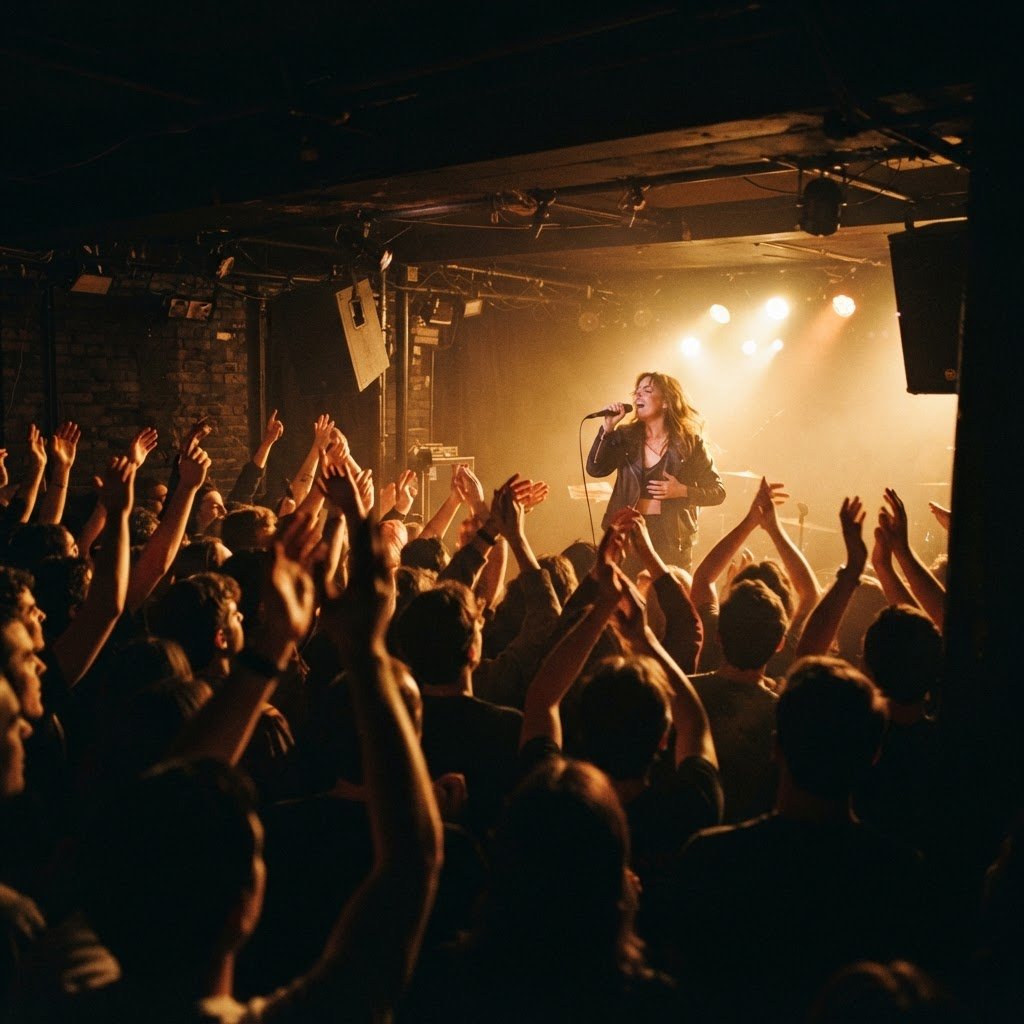
Smaller, more intimate live formats have thrived alongside the stadium-scale spectacles. Independent comedy nights, small-venue gigs, literary readings, and pop-up theatrical events have proliferated, driven by audiences seeking experiences that feel personal rather than mass-produced. The appeal is partly scale: a small room offers a closeness that a stadium cannot. It is also partly discovery: the next artist, comedian, or performer worth following is more likely to be found in a basement venue than on a recommendation algorithm.
The cultural function of live entertainment extends beyond the events themselves. Live experiences generate the stories that people tell afterward. The concert where the power went out and the band played acoustically. The comedy show where a heckler became part of the act. The play where an actor’s impromptu improvisation brought the house down. These stories outlast the event, becoming part of the social fabric that connects people, shared and reshared until they take on a life of their own. A streaming session does not generate stories in the same way, because it does not contain the same element of shared, unpredictable reality.
The relationship between live and digital entertainment is also more symbiotic than competitive. Streaming platforms produce concert films and comedy specials that serve as marketing for the live tours that generate far more revenue. Social media clips of live performances go viral, driving ticket sales for future shows. The digital ecosystem feeds the live one, and the live one feeds back. What has changed is the hierarchy. A few years ago, the streaming special was the destination and the live tour was the secondary revenue stream. Now, for many performers, the relationship has inverted. The live show is the event. Everything else is a way of getting people into the room.
For performers, this shift has meaningful implications. The ability to connect with a live audience — to hold a room, to read a crowd, to adapt in real time — has become a more valuable skill than ever. The tools of production have democratised the ability to create digital content, but the ability to command a live audience remains scarce, difficult to fake, and difficult to scale. It is a skill that rewards time, practice, and the willingness to fail in public, and it is one that no amount of technological enhancement can substitute.
The trend extends beyond traditional entertainment categories. Food and wine tastings, craft workshops, wellness retreats, and immersive art installations have all seen growing demand. The common thread is the combination of physical presence, active participation, and a time-limited, unrepeatable experience. People are seeking experiences that demand their full attention, that cannot be multitasked or backgrounded, that require them to show up in body and mind. In a culture saturated with passive, on-demand entertainment, the experience that asks for presence has become a form of luxury.
Technology companies have noticed, and the response has been a wave of tools designed to make live experiences more accessible. Better ticketing platforms, dynamic pricing, virtual queueing, and live-streaming of events to remote audiences have all expanded the reach of live entertainment. These tools do not replace the in-person experience. They complement it, extending the audience for events that would otherwise be limited by venue size or geography. The result is a hybrid landscape where the live event remains the centre of gravity and the digital extensions orbit around it.
The broader cultural meaning of this trend is worth considering. In a world where so much of life is mediated by screens, curated by algorithms, and optimised for convenience, the value of being physically present for something unrepeatable has risen. Live entertainment is not just a category of spending. It is a statement about what matters: shared, embodied, present experience, in real time, with other people. The more digital life becomes, the more valuable the non-digital moments within it grow.
The most telling sign is the behaviour of the generation that has grown up entirely inside the digital world. Young audiences, who have never known a world without streaming, are among the most enthusiastic attendees of live events. They are not turning to live entertainment out of habit or nostalgia. They are turning to it because, having experienced the alternative, they recognise what the alternative lacks. The room, the crowd, the sound, the shared moment — these are not relics of a pre-digital era. They are the things that the digital era, for all its gifts, has made precious.
Live experiences are becoming more valuable not because digital entertainment is failing, but because it is succeeding so well that it has revealed, by contrast, what it cannot offer. The concert, the play, the comedy show, the small venue with the unknown act — these are not escapes from the digital world. They are the things that make the digital world bearable. And that, perhaps, is why the ticket costs what it costs and why the seats, again and again, are full.




