
A perspective piece from The Listening Market
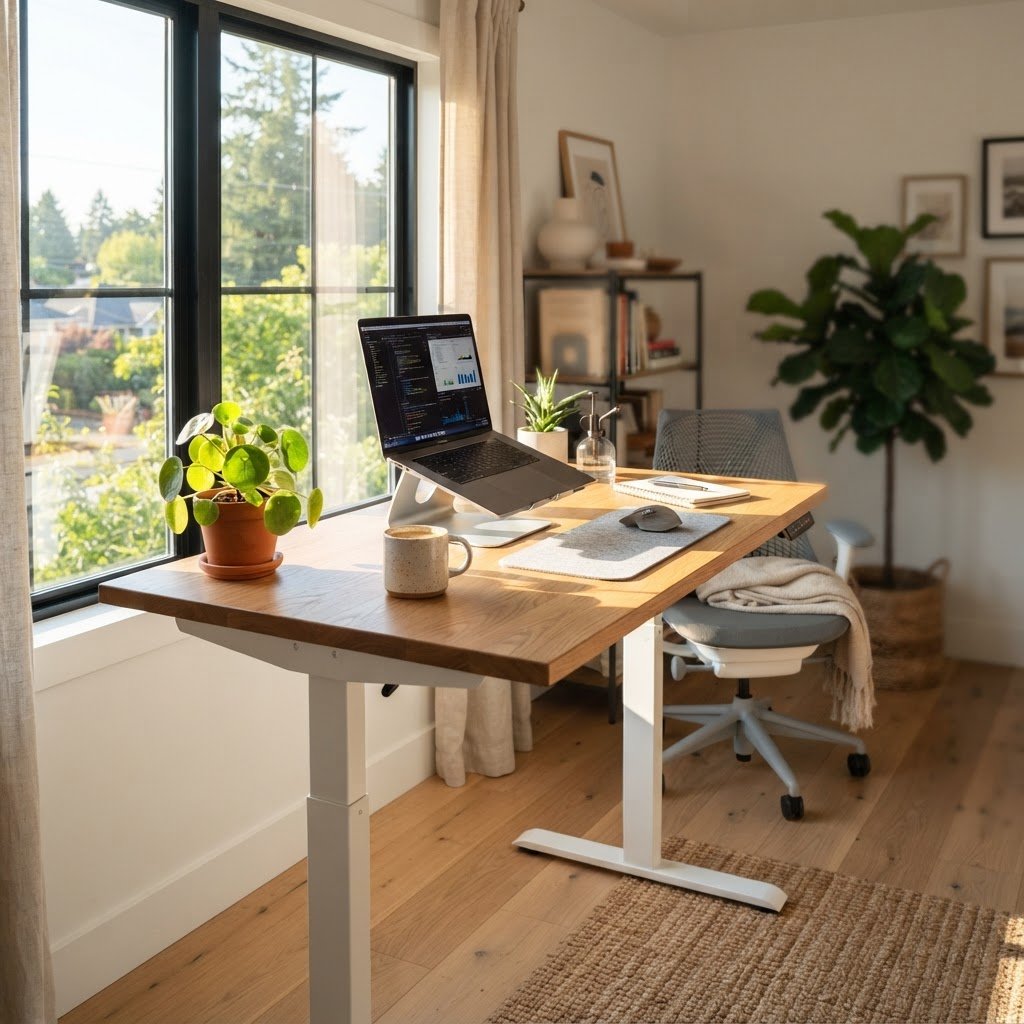
Walk into any co-working space in 2026 and the scene has shifted in a subtle but unmistakable way. The rows of seated workers hunched over laptops, the posture that defined an entire generation of office culture, are increasingly interrupted by people working upright. Standing desks, once a niche ergonomic upgrade reserved for tech executives and wellness enthusiasts, have quietly become one of the most visible changes in how and where people work. What started as a premium office perk has filtered down to home offices, kitchen benches, and even shared workspaces, driven by a cultural moment that values movement, longevity, and the simple feeling of not being stuck in a chair for eight hours straight.
The shift did not happen overnight. For years, the conversation around sitting was framed by a single alarming statistic: that prolonged sitting was the new smoking. Headlines warned of cardiovascular risks, metabolic slowdown, and musculoskeletal damage. The messaging was loud but the response was slow. Standing desks were expensive, clunky, and often bought as a statement piece rather than a practical tool. Many ended up as expensive shelving. What changed was not the science but the accessibility. Motorised sit-stand desks dropped in price dramatically. Manual crank versions became available for under a hundred dollars. Desktop converters, the kind that sit on top of an existing desk and raise a monitor and keyboard, became a common sight on marketplace listings and in big-box stores. The barrier to entry fell, and with it, the cultural reluctance.
There is also something deeper happening beneath the surface of this trend. The pandemic reshaped the relationship people have with their workspaces. When the kitchen table became the office, the discomfort of sitting in a dining chair for hours became impossible to ignore. People started experimenting. Ironing boards became makeshift standing desks. Stacks of books raised monitors to eye level. The ingenuity of those early lockdown months planted a seed that has continued to grow. Now that hybrid and remote work have settled into permanence, people are investing in their setups with a seriousness that was rare before. A standing desk is no longer a workplace perk to request from an employer. It is a personal health decision made in the same spirit as buying a good mattress or a decent pair of running shoes.
The health case for standing more is more nuanced than the early headlines suggested. The truth is that standing all day is not inherently better than sitting all day. Both extremes come with problems. What the current wave of standing desk adopters has learned, often through trial and error, is that the benefit comes from the alternation. The body is designed to move, not to hold any single position for hours. The best routines involve shifting between sitting and standing every thirty to sixty minutes, a rhythm that keeps muscles engaged, circulation flowing, and the mind alert. The standing desk is less a replacement for a chair and more a tool for variety, a way of breaking the monotony of a single posture.
What has been surprising is how much of the appeal is psychological rather than purely physical. People who use standing desks consistently report feeling more alert during the parts of the day when they stand. The act of being upright, of having weight through the legs and the spine in a natural extension, seems to create a subtle sense of readiness. Afternoon energy dips, the kind that send people reaching for a third coffee or a sugary snack, are reportedly less intense when the afternoon is spent standing. Whether this is a genuine physiological effect or a placebo of intention is almost beside the point. People feel better, and that feeling is what keeps the habit in place.
The trend has also caught on because it aligns with a broader cultural movement toward wellness integration rather than wellness as a separate activity. For a long time, being healthy meant carving out dedicated time for exercise, meal prep, meditation, and recovery, all on top of a full workday. The exhaustion of that approach has led people to look for ways to build wellness into the activities they are already doing. A standing desk does exactly that. It does not require extra time. It does not require changing clothes or driving anywhere. It simply changes the posture of an activity that was already going to happen. In a culture where time is the scarcest resource, passive wellness, the kind that happens while you are doing something else, has enormous appeal.
The workplace wellness industry has taken notice. Companies that once viewed standing desks as a special request are now including them in standard office fit-outs. Insurance providers in some markets have begun offering reduced premiums for workplaces that meet certain ergonomic and movement standards. The logic is straightforward: less musculoskeletal complaints means fewer workers’ compensation claims, and active employees tend to take fewer sick days. The economic case has caught up with the health case, and that convergence is accelerating adoption at an institutional level.
But the trend is not without its critics. Some ergonomists have warned that the rush to standing has created its own set of problems. Standing on hard surfaces for too long can cause foot, knee, and lower back pain. Poorly positioned monitors and keyboards on standing setups can lead to neck strain and wrist issues that are just as debilitating as those caused by sitting. The market has responded with accessories: anti-fatigue mats, balance boards, cushioned footwear, and desk treadmills that allow walking at a slow pace while working. The ecosystem around standing desks has grown into its own miniature industry, one that did not exist a decade ago.
There is also a quieter, more philosophical dimension to the standing desk movement. It represents a small but meaningful rejection of the idea that comfort is the ultimate goal of modern life. For decades, the trajectory of technology and design was toward making things easier, softer, and more passive. Chairs got more cushioned. Screens got bigger. Everything was engineered to minimise physical effort. The standing desk pushes back against that current. It says that a little discomfort, a little effort, a little engagement with the physical body, is not something to be engineered away but something to be embraced. It is a small daily act of choosing to be slightly less comfortable in service of feeling slightly more alive.
The generational dimension is worth noting too. Younger workers, the ones who entered the workforce during or after the pandemic, have shown the highest rates of standing desk adoption. This is a generation that grew up with ergonomic messaging in schools, with awareness of screen time and posture from an early age, and with a cultural vocabulary that treats physical wellbeing as inseparable from professional performance. For them, a standing desk is not a quirky upgrade but a baseline expectation, as normal as a second monitor or a wireless mouse. As this cohort moves into management roles and shapes workplace culture, the standing desk is likely to become the default rather than the exception.
Looking ahead, the next evolution may well be beyond the binary of sitting and standing altogether. Walking desks, which combine a slow treadmill with a work surface, are growing in popularity among the same early-adopter crowd that first embraced standing desks. Dynamic seating, including wobble stools and active chairs that require core engagement, is offering a middle ground for those who find standing fatiguing but sitting stagnant. The workplace of the near future may not be defined by any single posture but by the freedom to move between many.
What the standing desk trend ultimately reveals is a culture in the middle of a meaningful recalibration. The relationship between bodies and work, long treated as an afterthought, is being brought to the centre of how people think about their daily lives. The standing desk is a symbol of that recalibration, a tangible object that represents an intangible shift in values. It says that work does not have to come at the cost of the body, that health does not have to be something squeezed into the margins of a busy day, and that the way people work is not fixed but can be redesigned, one small adjustment at a time.




