
A perspective piece from The Listening Market
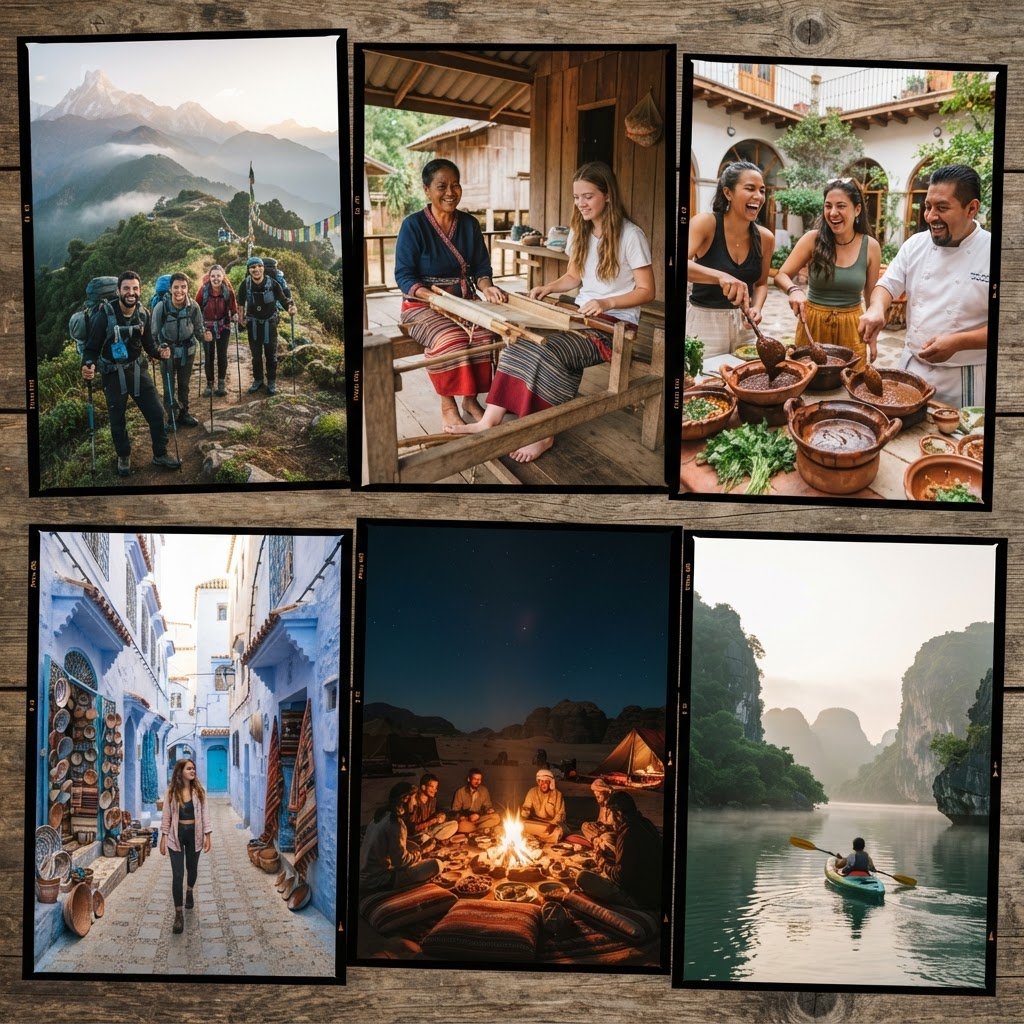
For decades, the standard holiday followed a predictable script: a booked package, a beachfront resort, a prescribed itinerary of tourist landmarks, and a return ticket scheduled just as exhaustion began to give way to rest. That paradigm is fracturing. As travellers navigate an increasingly fast-paced and hyper-connected world, the allure of passive consumerism in crowded destinations has diminished. The sun-bed sprint at dawn, the manicured enclosure of the all-inclusive resort, and the standardized buffet line are no longer seen as luxury; for many, they feel remarkably like another form of work. In their place, a profound shift toward intentionality has taken root, prompting millions to seek out meaningful, immersive travel experiences instead of traditional holidays.
This evolution is not merely about changing destinations; it reflects a fundamental recalculation of what travel ought to achieve. In an era dominated by digital noise, remote work flexibility, and heightened ecological awareness, modern wanderers are asking deeper questions before booking a flight. Rather than collecting photo opportunities for social media feed updates or collecting passport stamps as trophies, travellers are looking for personal transformation, quietude, skill acquisition, and deep community connection. They are swapping crowded tourist corridors for rural hamlets, rigid tour schedules for open-ended stays, and surface-level sight-seeing for hands-on participation.
In 2026, the global travel mindset has pivoted decisively from passive escape to active engagement. People no longer want to watch a destination through the tinted window of a tour bus; they want to engage with its rhythm, support its local economy, and return home genuinely enriched. Here is an exploration of ten distinct travel experiences people are choosing instead of traditional holidays, along with an examination of why this cultural shift matters so profoundly.
The Rise of Purposeful & Extended Stays
The rhythm of modern travel is changing as people question the value of compressed, high-stress trips that leave them needing a vacation from their vacation. Extended, purpose-driven journeys offer a potent antidote to burnout and surface-level tourism, allowing individuals to establish meaningful roots even during temporary stays.
Slow village residencies and extended sabbaticals. Rather than hopping through four European capitals in ten days, travellers are choosing to drop anchor in a single rural village or small coastal town for weeks or months at a time. By renting a modest apartment or cottage, shopping at local morning markets, and learning the nuances of neighborhood life, visitors move from the category of tourist to temporary resident. This approach allows individuals to establish a peaceful daily routine, forge authentic relationships with local shopkeepers, and absorb the true cultural cadence of a place. The focus shifts from seeing everything to simply experiencing being somewhere else, offering psychological restoration that frantic sightseeing can never provide.
Regenerative conservation and citizen science expeditions. The desire to leave a destination better off than it was found has driven a surge in hands-on conservation travel. Instead of spending a week at an all-inclusive eco-resort with minimal community interaction, travellers are actively participating in ecological restoration projects alongside wildlife biologists, environmental researchers, and local rangers. Whether tracking snow leopards in the high ranges of Central Asia, restoring damaged coral reefs in the South Pacific, or monitoring native bird populations in temperate rainforests, these journeys replace passive consumption with tangible environmental impact. Participants gain deep scientific literacy while funding vital preservation efforts directly on the ground.
Culinary apprenticeships and food heritage journeys. Food has always been a primary window into regional culture, but current travel trends go far beyond dining at highly rated tourist restaurants. Travellers are immersing themselves in regional foodways through multi-week culinary apprenticeships, farm stays, and traditional craft learning. From mastering traditional pasta-making techniques under the guidance of home cooks in Emilia-Romagna to participating in the autumn olive harvest in Andalusia or learning zero-waste fermentations in rural Japan, these journeys center on heritage, agriculture, and land stewardship. Food becomes a medium for storytelling, intergenerational knowledge transfer, and sensory connection.
Silent retreats and mental detox sanctuaries. In an era dominated by relentless digital notifications, work messages, and sensory overload, absolute quiet has become the ultimate luxury. Travellers are increasingly opting for structured silence and digital detox sabbaticals in remote monasteries, desert outposts, or mountain sanctuaries. Unplugged from smartphones and free from the social pressure of constant connectivity, participants engage in meditation, reflective walking, and somatic restoration. These stays prioritize internal exploration over external spectacle, helping individuals reset their nervous systems in environments designed specifically for quiet introspection and mental clarity.
Active Immersion & Cultural Engagement
As travellers seek deeper authenticity, active participation has replaced passive observation. Physical challenge, creative learning, and genuine cultural exchange are becoming central pillars of the modern travel experience.
Long-distance trail pilgrimages and thru-hiking journeys. The simple, ancient act of walking for days or weeks across vast landscapes has seen a major global resurgence. Historic routes like Japan’s Kumano Kodo, Spain’s Camino de Santiago, and the rugged trail networks of Scandinavia and South America are drawing people seeking simplicity, physical endurance, and personal reflection. Walking through landscapes at a human pace strips away the noise of modern life. Carrying necessary gear on one’s back, navigating terrain step by step, and arriving at rustic lodges or mountain shelters creates a meditative cadence. The journey itself becomes the destination, providing mental clarity that static resort stays rarely foster.
Community-owned homestays and indigenous cultural immersion. Disillusioned by standardized luxury hotel chains that isolate guests from their actual surroundings, travellers are seeking authentic homestays managed directly by local communities. Living alongside host families in rural regions of Peru, Nepal, or Kenya offers an intimate perspective on daily life, oral histories, regional agricultural practices, and cultural traditions. Crucially, these community-led economic models ensure that tourism revenues flow directly into host families and regional infrastructure rather than foreign management corporations, creating sustainable financial support while cultivating genuine mutual respect between guest and host.
Heritage craft and artisanal workshops. The revival of global interest in handmade craftsmanship has inspired a new wave of educational travel centered on traditional skills. Instead of purchasing mass-produced plastic souvenirs, travellers dedicate their trips to learning ancient trades directly from master artisans. Examples include learning timber framing in New England, natural indigo dyeing in West Africa, pottery wheel throwing in rural Portugal, or traditional wooden boat-building in Scandinavia. These intensive, hands-on workshops provide participants with tangible practical skills, respect for material culture, and a deep connection to regional craft traditions.
Reconnecting with Nature, Heritage, and Self-Reliance
The desire for wilderness engagement and personal growth has redefined how people spend their precious leave days, leading to travel models built around celestial landscapes, personal origin stories, and practical self-sufficiency.
Dark sky astrotourism and wilderness retreats. As light pollution encroaches upon urban and suburban environments across the globe, the experience of a clear, unpolluted night sky has become exceedingly rare. Astrotourism has emerged as a compelling motivation for travel, with enthusiasts heading to remote, certified dark-sky reserves such as the Namib Desert, the Chilean Andes, or northern Scandinavia. Combining backcountry camping, astronomical observation, and nocturnal wildlife monitoring, these trips reawaken a sense of wonder and cosmic perspective under brilliant celestial canopies far removed from city lights.
Ancestral lineage journeys and archival exploration. Advances in genetic genealogy and digitized archival records have fueled a powerful travel trend: tracing family heritage back to its geographic origins. Rather than visiting generic sightseeing spots, individuals design custom itineraries around rural villages, historic parish archives, ancestral homesteads, and former industrial ports associated with their forebears. Guided by local historians or meticulous personal research, these journeys offer a deep sense of place and personal identity, anchoring individual narratives within broader historical contexts.
Off-grid skill retreats and micro-homesteading courses. A growing desire for self-reliance, environmental stewardship, and practical knowledge has given rise to wilderness retreats focused on sustainable living skills. Set in remote eco-farms or mountain homesteads, these hands-on programs teach permaculture principles, timber construction, off-grid energy management, wild foraging, and natural building techniques. Participants step away from modern conveniences to reconnect with fundamental human capabilities, leaving with increased confidence, environmental awareness, and practical knowledge that extends long after the trip ends.
Why This Shift Matters for the Future of Travel
The growing preference for immersive travel experiences instead of traditional holidays signals a structural movement in global tourism culture. This transition holds profound implications for fragile ecosystems, regional economies, and the psychological well-being of travellers themselves.
First and foremost, the shift away from mass resort tourism helps mitigate the devastating effects of over-tourism in hyper-visited destinations. When travellers choose rural villages, craft workshops, and long-distance trails, tourism capital and foot traffic are distributed far more evenly across countries and regions. Small communities that were previously bypassed by major commercial tour operators receive direct economic benefits, supporting independent businesses, preserving cultural heritage, and keeping regional traditions alive without succumbing to commercial exploitation or cultural dilution.
Furthermore, experiential travel offers a far more effective antidote to modern burnout than traditional relaxation holidays. While laying beside a swimming pool for a week can offer temporary physical rest, it often fails to quiet a stressed mind or restore a sense of purpose. Immersive travel, by contrast, demands presence, curiosity, and active engagement. Whether learning a complex craft, walking a historic trail, or contributing to wildlife conservation, experiential travel engages the human spirit in ways that build resilience, foster gratitude, and create lasting memories.
Ultimately, travel in 2026 is becoming less about fleeing everyday life and more about enriching it. As people seek depth over breadth and genuine connection over superficial consumption, the definition of a successful journey is being fundamentally rewritten. By choosing alternative travel experiences instead of traditional holidays, individuals are reclaiming travel as a powerful tool for personal growth, cultural stewardship, and meaningful human connection.