A perspective piece from The Listening Market
Digital clutter is the kind of mess that does not visible. There is no pile of clothes on a chair, no stack of papers on a desk. But it is there — in the three thousand unread emails, the forty-seven apps on a phone that have not been opened in months, the twelve thousand photos that have never been sorted, and the notification settings that make the device buzz every few minutes for reasons that no one can quite remember agreeing to. The weight of digital clutter is real, even if it is invisible. And unlike physical clutter, it can be dealt with in a single weekend.
The approach that follows is not about minimalism. It is about reducing the digital environment to the things that are actually used and genuinely valued. It does not require special apps, subscriptions, or a degree in organisation. It requires a weekend, a bit of focus, and the willingness to let go of things that are not serving any purpose.
Saturday Morning: The Email Inbox
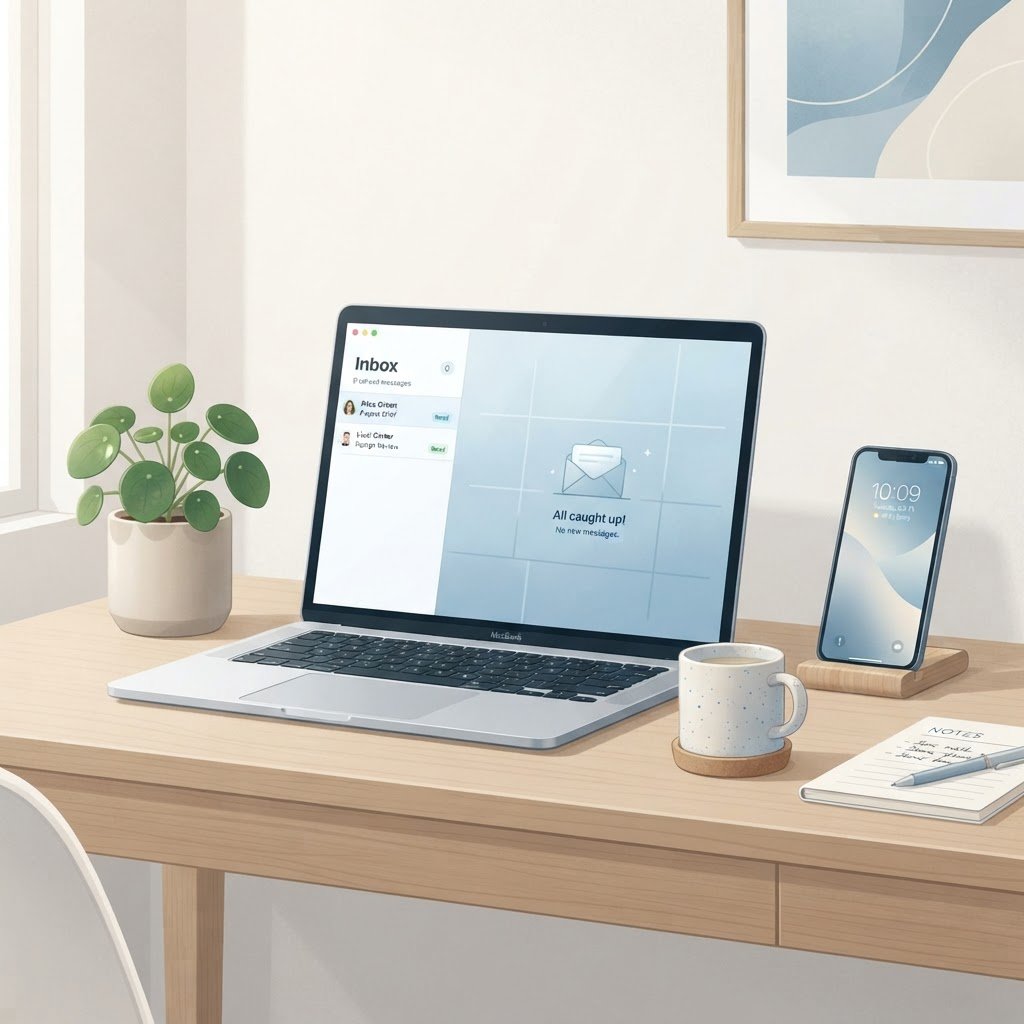
Start with the inbox because it is usually the worst, and clearing it creates immediate momentum. The goal is not to read every email. The goal is to get to zero. Open the inbox, sort by sender, and start deleting. Promotional emails from stores no longer shopped at — gone. Newsletters that have not been opened in three months — gone. Old receipts, notifications from services no longer used, calendar reminders from 2024 — all gone. For anything that needs to be kept, create a single folder called “Archive” and move it there. Do not create a system of folders. One archive folder is enough. The search function will find anything that needs to be found later.
Once the inbox is at zero, the next step is prevention. Unsubscribe from every newsletter and promotional list that is not genuinely wanted. This takes about twenty minutes and changes the flow of incoming clutter permanently. Most email providers have an unsubscribe button at the top of promotional emails. Use it ruthlessly.
Saturday Afternoon: The Phone
The phone is where most digital friction lives. Start with the home screen. Every app that is not used at least weekly gets moved off the home screen — not deleted yet, just moved. This alone changes the experience of picking up the phone. The home screen should contain only the things that are actively used and genuinely wanted.
Next, go through the full app list and delete. Be honest. The meditation app that was opened twice in eight months. The language learning app that was going to change everything. The three different weather apps. Delete them all. If something is needed later, it can be reinstalled in thirty seconds. The cost of deletion is near zero; the cost of keeping unused apps is constant low-level visual noise.
Then, notifications. This is the most impactful change of the entire weekend. Go through every app and turn off notifications unless they are from a real person trying to reach you. Messages, calls — yes. News apps, shopping apps, social media, games — no. The phone should not buzz unless a human being is trying to communicate. This single change transforms the relationship with the device.
Saturday Evening: Social Media and Subscriptions
Social media accounts that are no longer used should be deactivated, not just ignored. An account that sits unused is still collecting data, still appearing in search results, and still occupying mental space. For accounts that are kept, go through the following list and unfollow anything that does not add genuine value — accounts that make you feel worse, accounts that post nothing of interest, accounts that exist only to sell. The feed should be a curated space, not a firehose.
Then, subscriptions. Go through bank or credit card statements from the last three months and identify every recurring digital charge. Streaming services, app subscriptions, cloud storage, premium memberships. For each one, ask whether it has been used in the past month. If not, cancel it. The savings from this step alone often pay for the weekend several times over.
Sunday Morning: Files and Cloud Storage
Computer files accumulate the way attic clutter accumulates — slowly, invisibly, and with a vague sense that everything might be needed someday. Start with the desktop. Move everything into a single folder called “To Sort.” Then go through the Documents folder and apply the same logic as the inbox — delete what is clearly not needed, archive what might be, and organise what remains into a small number of broad folders. Do not create a complex filing system. Broad categories — Work, Personal, Financial, Reference — are enough.
Cloud storage deserves the same treatment. Check what is actually stored, how much space is being used, and whether the storage tier being paid for is necessary. Old phone backups, duplicated folders, and shared files from projects that ended years ago can usually be deleted.
Sunday Afternoon: Photos
Photos are the hardest part because they carry emotional weight. But twelve thousand unsorted photos on a phone is not a collection — it is a burden. The approach is simple: sort by date, and delete in batches. Blurred shots, screenshots that served a momentary purpose, duplicates, photos of nothing in particular — delete them all. For the photos that remain, create a small number of albums — Family, Travel, Events — and move the best ones in. The goal is not to keep every photo. It is to keep the ones that actually matter and make them findable.
Sunday Evening: Maintenance and Boundaries
The final step is to set up a light maintenance routine so the clutter does not return. A weekly email clear-out — fifteen minutes on a Friday afternoon. A monthly photo review — deleting anything that does not need to be kept. A quarterly subscription audit — checking that everything being paid for is still being used. These are not big tasks. They are small habits that keep the digital environment clean without requiring another full weekend.
Then, set some boundaries. Decide that the phone will not be the first thing reached for in the morning or the last thing looked at before sleep. Decide that notifications will stay off for anything that is not a real person. Decide that the inbox will be kept at zero, or close to it, as a default state rather than an aspiration.
By Sunday evening, the digital environment will feel different. The phone will be calmer. The inbox will be manageable. The files will be findable. The photos will be a collection rather than a dump. And the weight — that invisible, hard-to-name weight that comes from living in a constant state of digital noise — will be noticeably lighter. Not gone, but lighter. And in a culture where the default is accumulation, that is no small thing.