
A perspective piece from The Listening Market
Walk into any supermarket in 2026 and the drinks aisle tells a story. Where once there was a simple division between soft drinks, juices, and water, there is now a sprawling landscape of bottles and cans making claims that would have seemed absurd a decade ago. Drinks that promise focus. Drinks that calm the mind. Drinks that support gut health, boost immunity, enhance sleep, or provide a clean alternative to the afternoon coffee crash. Functional drinks have arrived, and they are everywhere.
This is not a quiet trend. The global functional beverage market has been growing at a pace that has caught even industry analysts off guard. What began as a niche category, a few kombucha brands in health food stores, a handful of adaptogen-infused sparkling waters sold online, has become a mainstream phenomenon. Shelves that once stocked ten varieties of cola now stock ten varieties of probiotic soda. The question is no longer whether functional drinks are a trend. The question is why, and what it says about the people buying them.
The Slow Death of the Sugary Soft Drink
For decades, the beverage industry was built on sugar and caffeine. Soft drinks promised refreshment and delivered a sugar rush. Energy drinks promised alertness and delivered a jolt of synthetic stimulants. Both worked, in the narrow sense that they produced an immediate sensation. Both also carried consequences that became harder to ignore.
The shift away from sugary soft drinks was not sudden, but it was steady. As information about metabolic health, sugar addiction, and the long-term effects of high-fructose corn syrup became widely understood, consumers began looking for alternatives. Bottled water was the first wave. Sparkling water was the second. But neither offered what the soft drink had promised beyond hydration: a feeling, a function, a reason to choose it over tap water.
Functional drinks filled that gap. They offered the sensation of choice without the guilt, the ritual of opening a can without the sugar crash. They spoke a language that resonated with a generation raised on wellness information: clean ingredients, transparency, purpose. They were not just drinks. They were small daily acts of self-care, packaged in aluminium.
What Is a Functional Drink, Really?
The term functional drink is broad enough to cover a wide range of products, but at its core it refers to a beverage that offers a health benefit beyond basic nutrition. This can take many forms. Probiotic drinks that support gut health. Nootropic sodas that claim to enhance cognitive function. Adaptogen-infused beverages that promise stress relief. Electrolyte drinks positioned for everyday hydration rather than athletic performance. Magnesium-sparked sparkling waters marketed for sleep and relaxation.
What unites these products is not a single ingredient but a shared philosophy. Each one positions itself as a tool, a small intervention in the day designed to produce a specific outcome. Drink this to focus. Drink this to unwind. Drink this to recover. The drink is not just a refreshment. It is a functional object, consumed with intention.
This framing matters. It reflects a broader cultural shift in how people think about health, not as something addressed solely through doctors and medicine, but as something woven into daily choices. The drink in your hand is no longer neutral. It is a statement about what you are trying to achieve.
The Instagram Effect
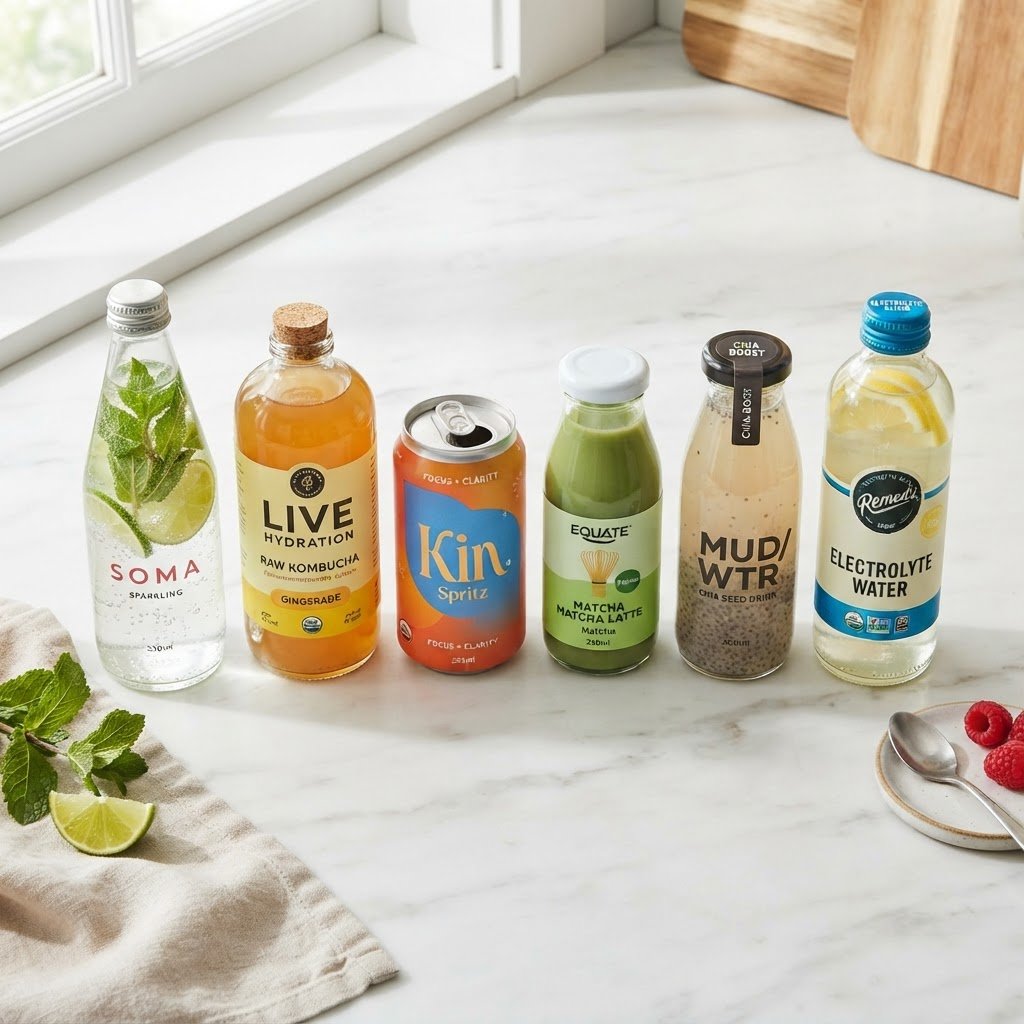
It would be naive to discuss the rise of functional drinks without acknowledging the role of visual culture. These products are, almost without exception, beautifully designed. Pastel cans with minimalist typography. Glass bottles with botanical illustrations. Packaging that looks as good on a desk as it tastes in the mouth. The aesthetic is deliberate, and it works.
Social media has been a powerful engine for the functional drinks category. A visually appealing can, photographed in morning light on a clean kitchen counter, performs well on platforms where wellness content thrives. The drink becomes a prop in a curated lifestyle, a symbol of intentionality and health consciousness. People buy these products because they believe in their benefits, but they also buy them because they want to be the kind of person who drinks them.
This is not a criticism. Identity has always played a role in consumer choices. The difference now is that the products are better, the claims are more specific, and the aesthetic language is more sophisticated. The functional drink does not just promise health. It promises a version of selfhood that feels aspirational and attainable at the same time.
The Science Behind the Claims
For all the marketing polish, the question that matters is whether functional drinks actually work. The answer, as with most things in nutrition, is complicated. Some ingredients have substantial research behind them. Probiotics have been shown to support gut health in numerous studies. Magnesium is widely recognised for its role in sleep and muscle function. Electrolytes are essential for hydration, particularly after exercise or illness.
Other ingredients sit in a greyer area. Adaptogens like ashwagandha and reishi mushroom have a growing body of evidence but are far from conclusively proven. Nootropic compounds such as L-theanine, found naturally in tea, have demonstrated mild cognitive effects, but the doses in many commercial drinks may be too low to produce meaningful results. The gap between what a label promises and what a body experiences can be significant.
None of this has slowed the market. Consumers, particularly younger ones, seem willing to pay a premium for the possibility of benefit even when the evidence is incomplete. This is not necessarily irrational. A probiotic soda that costs more than a cola but contains less sugar and some beneficial bacteria is, on balance, probably a better choice. The functional drink does not need to be a miracle to be an improvement.
The Price of Wellness in a Can
There is an uncomfortable question that sits beneath the functional drinks boom: who can afford to drink their health? A can of premium functional soda typically costs between four and seven dollars. A bottle of adaptogen-infused sparkling water can run higher. For people who treat these drinks as occasional purchases, the cost is manageable. For those who incorporate them into daily routines, the expense adds up quickly.
This has led to a debate within the wellness community about accessibility. Functional drinks are, in many ways, a luxury product. They are sold in premium retailers, marketed to affluent consumers, and positioned as lifestyle goods. The benefits they offer, gut health, stress relief, cognitive support, are benefits that should ideally be available to everyone, not just those who can afford a six-dollar can of sparkling water with added magnesium.
The industry is beginning to respond. Some brands are introducing more affordable lines. Supermarket own-label functional drinks have started appearing on shelves, bringing prices down. But the fundamental tension remains: wellness, as it is packaged and sold, often carries a price tag that excludes the people who might benefit from it most.
The Caffeine Alternative
One of the most interesting developments within the functional drinks space is the rise of caffeine alternatives. For a generation that grew up relying on coffee for energy, the search for a gentler, more sustained source of alertness has become a quiet cultural project. Functional drinks infused with matcha, yerba mate, guayusa, or green tea extract offer a different caffeine experience: a slower release, less jitteriness, a softer landing.
The appeal is not just physiological. It is cultural. Coffee has become associated with overwork, with the grind, with the need to push through exhaustion. The caffeine alternative suggests a different relationship with energy: one that is more measured, more intentional, more in tune with the body’s natural rhythms. It is energy as self-care rather than energy as survival.
This shift is part of a larger pattern. Functional drinks are not replacing coffee or alcohol entirely. They are offering a third option, a middle path between stimulation and sedation. A drink that provides a mild lift without a crash. A drink that promotes relaxation without drowsiness. In a culture that has long operated in extremes, the appeal of something in between is considerable.
Where the Trend Goes From Here
The functional drinks market shows no signs of slowing. If anything, it is accelerating, with new brands entering the space every month and established beverage giants launching their own functional lines. The category is fragmenting into ever more specific niches: drinks for focus, drinks for sleep, drinks for recovery, drinks for skin health, drinks for immune support. Each niche promises a precisely targeted benefit, tailored to a precisely defined consumer.
Whether this fragmentation is sustainable is an open question. The market will eventually reach saturation, and not every brand will survive. Some will be exposed for making claims they cannot support. Others will be undercut by cheaper alternatives. The winners will likely be those that combine genuine efficacy with a compelling story and an accessible price point.
For now, though, the functional drink has become something more than a product category. It is a mirror of how people in 2026 think about their bodies, their time, and their choices. It reflects a desire for control, for intentionality, for small daily acts that feel meaningful. The drink in the hand is no longer just a drink. It is a decision about what kind of day this is going to be. And increasingly, people are choosing to make that decision deliberately, one can at a time.




