
A perspective piece from The Listening Market
The air conditioner is one of the most used and most neglected appliances in the modern home. It runs through the hottest months of the year, often for hours at a stretch, and then sits unnoticed until something goes wrong. The relationship most people have with their air conditioner is reactive. A unit that cools less than it used to, that begins to rattle, or that produces an unpleasant smell is usually the first sign that maintenance has been overdue for some time. Maintaining an air conditioner is not complex, but it does require attention at the right intervals. The reward is a unit that runs efficiently, lasts longer, and costs less to operate through every season it works.
The fundamental principle is that an air conditioner moves heat from inside the home to outside. Any obstacle that interferes with that movement of air forces the system to work harder. Dirty filters, blocked vents, clogged outdoor coils, and leaky ducts all reduce the efficiency of the unit and increase the energy it consumes. The cost of neglect shows up quietly on the power bill and then suddenly in the cost of a major repair. A routine of simple, regular maintenance catches the small problems before they become the kind that demand a technician and a significant invoice.
The Filter and the First Line of Defence
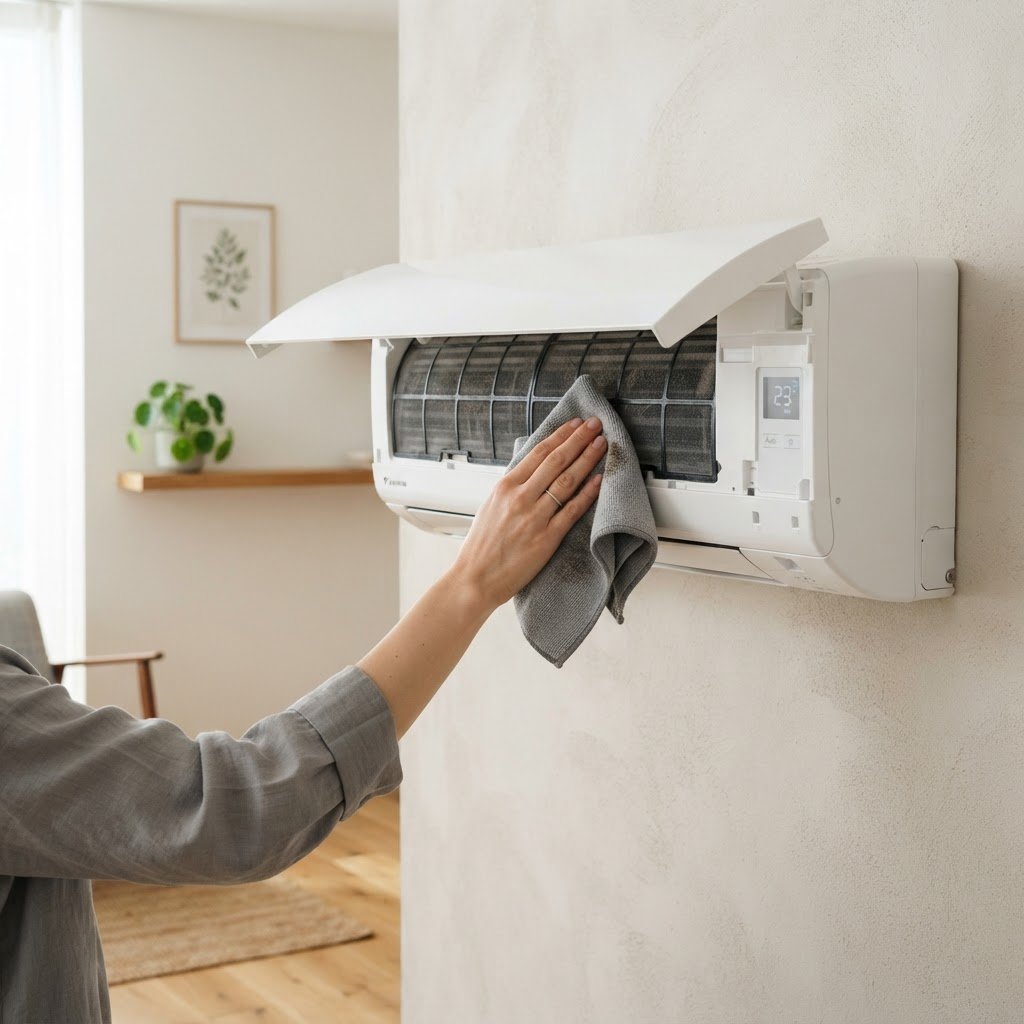
The air filter is the one component of an air conditioning system that most homeowners can and should maintain themselves. The filter sits in the return air path and traps dust, pollen, and airborne particles before they reach the internal coils. Over weeks of use, the filter becomes loaded with that material and the airflow through it drops. A clogged filter forces the fan to work harder, reduces the cooling capacity of the unit, and can eventually allow dust to reach the delicate internal coils where it causes more serious problems. The filter should be checked monthly during periods of heavy use and cleaned or replaced as needed. A washable filter can be rinsed under running water, dried thoroughly, and returned. A disposable filter should be replaced with one of the same size and rating. This is the single most effective maintenance step a homeowner can take.
Cleaning the Evaporator and Condenser Coils
Behind the filter sit the evaporator coils, the cold surfaces that absorb heat from the indoor air. When dust and debris reach these coils, they form an insulating layer that reduces the transfer of heat and traps moisture, creating the conditions for mould and unpleasant odours. Cleaning the indoor coils is a more delicate task than replacing a filter and may require a soft brush, a coil cleaner formulated for the purpose, and care not to damage the fragile fins. For those who use the unit heavily, an annual cleaning of the indoor coils, often done as part of a professional service, keeps the unit performing at its designed capacity. The outdoor condenser coils face a different challenge. They sit in the open air and collect dust, leaves, grass clippings, and the debris of every season. Keeping the area around the outdoor unit clear and gently hosing the coils a few times a year removes the buildup that restricts airflow and forces the compressor to work harder.
The Outdoor Unit and the Space It Needs
The outdoor unit of a split system, or the condenser of a ducted system, is often the forgotten half of the air conditioner. It sits outside, behind a fence or beside a wall, and receives no attention until a problem arises. Yet the outdoor unit is where the heat absorbed from inside the home is released, and any restriction of airflow around it directly affects the performance of the entire system. The unit needs clearance on all sides, free of plants, stored items, and debris. The fins on the coil are delicate and easily bent, which restricts airflow and reduces efficiency. A fin comb, used gently, can straighten minor damage. The unit should sit level on its base, and the area beneath it should drain freely to prevent rust and corrosion over time.
Refrigerant and Why It Is Not a DIY Task
A common question about air conditioner maintenance is when to add refrigerant. The honest answer is that, in a properly sealed system, refrigerant does not need to be added. Unlike fuel, it is not consumed. It circulates in a closed loop and should remain at the same level for the life of the unit. A system that is low on refrigerant has a leak, and adding refrigerant without finding and repairing the leak is a temporary fix that guarantees the problem will return. Handling refrigerant is not a task for a homeowner. It requires licensed equipment, training, and in most jurisdictions a certification that legally restricts the work. When a unit is performing poorly and the filters and coils are clean, the next step is to call a professional who can measure the pressures, find a leak if one exists, and restore the system to its proper charge.
Ductwork and the Quiet Loss of Efficiency
For ducted systems, the network of ducts that carries the conditioned air through the roof space or under the floor is a major factor in the overall efficiency of the system. Leaky ducts allow cooled air to escape into the roof or the subfloor rather than reaching the rooms it was meant for. The result is a system that runs longer, consumes more energy, and still leaves parts of the home uncomfortable. Ducts can be inspected for obvious disconnections, and a professional can test the system for leaks and seal them. Insulation on the ducts matters as well. Uninsulated or poorly insulated ducts running through a hot roof space lose a significant portion of the cooling before the air reaches the vent. The condition of the ducts is an invisible factor that quietly affects both comfort and cost.
Thermostat Habits and the Settings That Save Money
The thermostat is where the household meets the air conditioner in daily use, and the way it is set has a surprising effect on both efficiency and comfort. Setting the thermostat to a very low temperature in the hope that the space will cool faster is a common misunderstanding. The unit cools at the same rate regardless of the setting. A lower target simply means the unit runs longer and the space becomes colder than needed, often until someone notices and adjusts it again. A consistent setting, in a comfortable range, allows the unit to cycle efficiently and maintain a stable temperature. Programmable thermostats that raise the set point when the home is unoccupied and lower it before people return reduce the runtime without sacrificing comfort at the times it matters.
Drain Lines and the Water the System Removes
An air conditioner removes moisture from the air as part of the cooling process, and that water has to go somewhere. The condensate drain line carries it outside or to a suitable drain. Over time, the drain line can become blocked with algae, dust, and debris, and the water backs up. In a split system, this often shows up as water dripping from the indoor unit or pooling beneath it. Clearing the drain line is a simple task in many cases, done with a wet vacuum, a stiff wire, or a cleaning tablet placed in the drain pan. An annual check of the drain line prevents the messy and sometimes damaging overflow that occurs when the water has nowhere to go.
The Annual Professional Service
There is a limit to what a homeowner can do, and that limit is both practical and, in some cases, legal. An annual professional service covers the tasks that require training, tools, and access to the sealed components of the system. A licensed technician checks the refrigerant charge, tests the electrical connections, measures the airflow, inspects the coils in detail, and verifies that the system is operating within its design parameters. The cost of an annual service is modest compared to the cost of a major repair or an early replacement. A unit that is serviced each year runs more efficiently, lasts longer, and is far less likely to fail at the moment the household needs it most.
Seasonal Readiness
The timing of maintenance matters as much as the maintenance itself. The worst time to discover a problem with an air conditioner is on the first genuinely hot day of the season, when every technician in the area is already busy. A check of the system in the weeks before the heavy cooling season begins catches problems while there is time to address them. For systems that also provide heating, a similar check before the cold months ensures the unit is ready for the other half of its work. The seasonal rhythm of maintenance is simple, and it turns a reactive relationship with the appliance into a prepared one.
What Maintenance Actually Delivers
The accumulated effect of consistent maintenance is a system that performs as it was designed to. The filters flow freely, the coils transfer heat efficiently, the refrigerant remains at its proper level, and the ducts deliver the air where it is needed. The unit runs quietly, the energy consumption stays within reason, and the lifespan of the system extends into the range the manufacturer intended rather than falling short by years. Maintaining an air conditioner is not about perfection. It is about the steady attention that keeps a significant investment working at its best for as long as it can. That attention, applied at the right intervals, is what makes the difference between an air conditioner that lasts and one that simply fails sooner than it should have.
Focus Keyword: maintain your air conditioner
Meta Description: A practical guide to maintaining your air conditioner for better performance, longer lifespan, and lower energy bills, covering filters, coils, ducts, and professional servicing.
SEO Title: How to Maintain Your Air Conditioner for Better Performance | The Listening Market




