
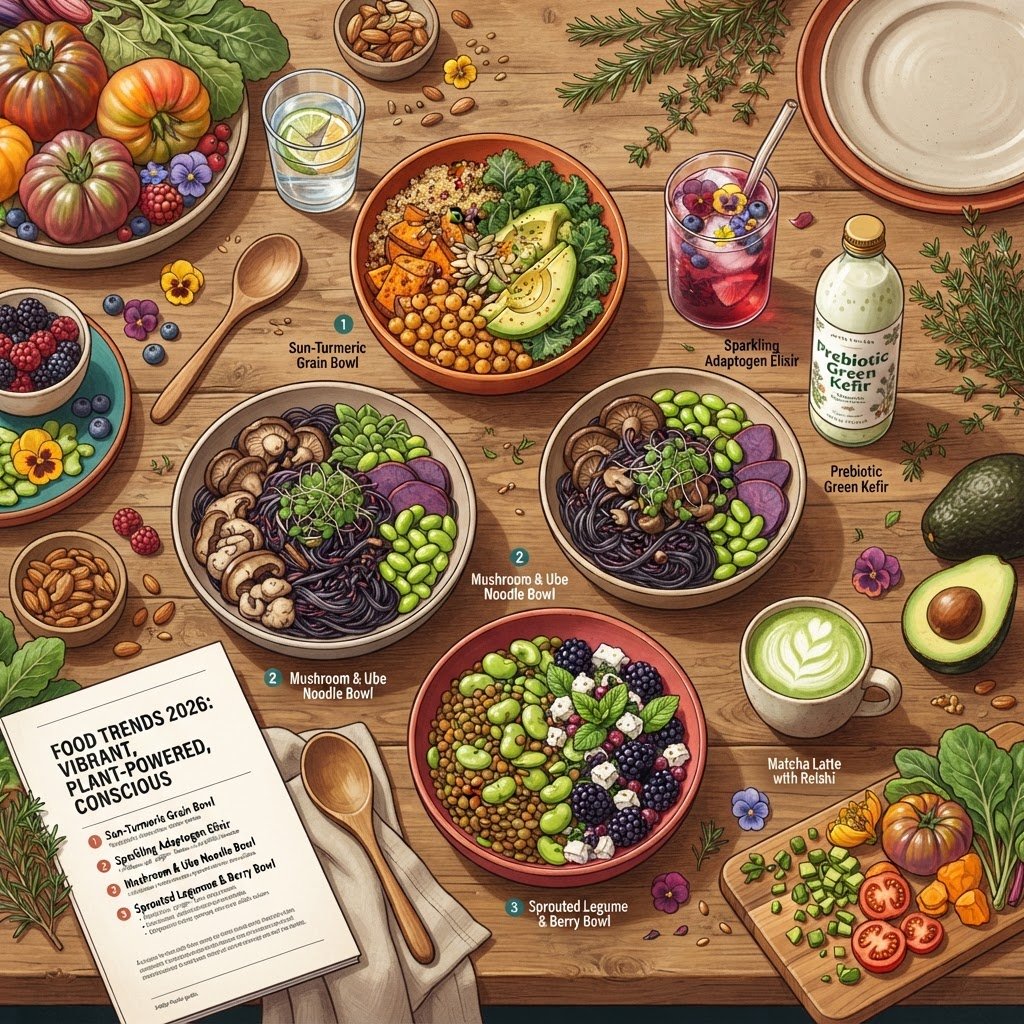
A perspective piece from The Listening Market — On a quiet morning in a neighborhood bakery, a fundamental transformation is rising inside the oven. The bread baking within is not made from modern white wheat, nor is it a hyper-processed gluten-free loaf bound together by synthetic gums. Instead, the golden crust forming in the heat belongs to Kernza—a perennial grain with deep root systems that extend ten feet into the earth, drawing up trace minerals while filtering groundwater. A decade ago, Kernza was an experimental crop confined to agricultural research stations. In 2026, it is appearing on morning menus across major cities, signaling a profound evolution in how society thinks about food, vitality, and planetary health.
The contemporary landscape of eating is undergoing its most meaningful realignment in recent history. For years, food culture swung between two unpersuasive extremes: hyper-processed convenience on one hand, and rigid, restrictive wellness diets on the other. In 2026, a far more mature and reflective philosophy has taken hold. Food trends this year are no longer driven by viral social media fads or aggressive elimination regimes. Instead, they reflect a collective desire for genuine nourishment that honors both biological complexity and environmental sustainability.
From climate-proof perennial crops and personalized metabolic awareness to whole-plant gastronomy and functional botanical hydration, the dominant food trends of 2026 offer a compelling portrait of a culture redefining health from the ground up.
Soil-First Nutrition and Climate-Resilient Super-Grains
For decades, industrial agriculture prioritized maximum yield above all else, relying heavily on a narrow selection of annual monocrops—primarily corn, soy, and high-yield dwarf wheat. While this system generated calorie abundance, it depleted topsoil ecosystems and diminished the micronutrient density of staple foods. The food trends of 2026 represent a decisive shift toward soil-first nutrition, led by climate-resilient perennial grains and ancient crops that thrive without heavy chemical reliance.
At the center of this movement are grains such as Kernza, fonio, teff, and red sorghum. Unlike traditional annual crops that require seasonal tilling—a practice that disturbs delicate fungal networks and releases stored carbon—perennial plants remain in the earth year after year. Deep root networks stabilize the soil, store atmospheric carbon, and foster vibrant underground micro-ecosystems. According to a 2025 agricultural research report published by The Land Institute, perennial grain systems reduce fuel and chemical inputs by up to seventy percent compared to annual wheat, while significantly enhancing soil water retention during prolonged dry periods.
For health-minded consumers, soil health translates directly into cellular nourishment. Scientific investigations increasingly demonstrate that crops grown in biologically rich, unplowed soil accumulate higher concentrations of protective polyphenols, trace minerals, and diverse dietary fibers. In 2026, craft bakeries, pasta producers, and cereal makers prominently highlight these resilient grains. Diners discover that Kernza flour imparts a complex, nutty depth that modern hybrid wheat cannot match, while fonio—an ancient West African grain—provides a light, nutrient-dense base rich in essential amino acids like methionine.
Eating in 2026 has become an act of active ecological stewardship. The modern plate is no longer separated from the land; every meal is recognized as a direct engagement with the living systems of the planet.
From One-Size-Fits-All Diets to Biometric Personalization
If the previous decade was characterized by sweeping, dogmatic diets—such as strict keto, raw veganism, or extreme carnivore plans—2026 marks the era of metabolic individualization. The realization that two individuals can consume the exact same roasted sweet potato and experience markedly different blood glucose and energy responses has effectively dispelled the illusion of a single ideal human diet.
This paradigm shift is supported by the widespread adoption of non-invasive continuous glucose monitors, wearable biometrics, and personalized gut microbiome testing. As documented in a 2025 consumer wellness study by McKinsey & Company, forty-two percent of health-focused consumers now use personal metabolic data to shape their daily meal choices, compared to less than fifteen percent four years prior.
In response, the food sector in 2026 is moving away from broad ‘superfood’ claims toward targeted, functional formulation. Supermarket aisles feature functional olive oils verified for specific polyphenol levels supporting cardiovascular resilience, targeted prebiotic fiber blends formulated for specific microbiome signatures, and botanical tea infusions designed to manage afternoon cortisol responses.
Importantly, this biometric approach is becoming intuitive rather than obsessive. Instead of meticulously counting calories in a state of chronic anxiety, individuals use biometric insights to cultivate somatic awareness. People learn how their bodies react to varied fiber pairings, meal timings, and cooking techniques. Nutrition in 2026 is not about guilt or hyper-control; it is about establishing harmony with unique biological rhythms.
Reclaiming Whole-Plant Mastery Over Ultra-Processed Alternatives
A few years ago, the food industry projected that the future of plant-based eating lay in highly engineered meat substitutes engineered to replicate the exact sizzle and texture of industrial beef. While these creations represented notable food chemistry accomplishments, public enthusiasm has visibly tempered. Consumers recognized that replacing factory-farmed meat with highly isolated plant proteins, synthetic binders, and industrial artificial flavors did not necessarily foster long-term human health.
In 2026, the culinary pendulum has returned to whole-plant mastery. The leading plant-forward trend no longer seeks to mask vegetables as animal products, but instead elevates whole vegetables, heirloom legumes, and wild mushrooms through sophisticated culinary craft.
Chefs and home cooks are leaning into ancestral techniques—wood-fire roasting, slow smoking, lacto-fermentation, and dry-aging. Whole maitake mushrooms are seared with garlic and smoked paprika until crisp and savory, delivering remarkable depth without artificial additives. Heirloom beans are braised slowly with sea vegetables and aromatic herbs, creating mineral-rich dishes that satisfy deeply.
Additionally, upcycled plant ingredients have become a major force in sustainable food systems. Upcycling turns agricultural byproducts—such as fruit pulp from juice pressing, spent barley from brewing, and cacao fruit pods—into nutrient-dense flours, snacks, and natural sweeteners. According to the Upcycled Food Association’s 2025 annual report, upcycled ingredients diverted over fifty million pounds of food waste from landfills while supplying high-fiber, antioxidant-rich alternatives to refined white flour.
Diners in 2026 seek clarity, simplicity, and whole ingredients. The lab-grown imitation phase provided an instructive transition; today’s culture embraces real, vibrant, earth-grown nourishment.
Sober Curiosity 2.0: Functional Botanical Elixirs and Neuro-Restoration
The social drinking landscape has experienced a lasting cultural transformation. Early non-alcoholic options often consisted of sugary mocktails that offered little more than fruit juice and soda water. In 2026, the sober curious movement has evolved into a refined culture of functional botanical hydration.
Alcohol consumption across diverse demographic groups has steadily declined over recent years. According to a 2025 global beverage market report by IWSR Drinks Market Analysis, non-alcoholic and ultra-low-alcohol beverage sales expanded by twenty-two percent globally, propelled by consumers prioritizing sleep quality, mental focus, and reduced cellular inflammation.
However, modern consumers are not merely seeking the absence of ethanol; they desire active physiological benefits from evening drinks. Sober Curiosity 2.0 centers on functional aperitifs and neuro-restorative beverages blended with adaptogenic mushrooms, herbal nerve tonics, fermented vinegars, and cold-pressed botanical extracts.
Rather than alcohol, these modern drinks incorporate reishi mushroom for calm, ashwagandha for nervous system balance, lion’s mane for cognitive clarity, and lemon balm for relaxation. Sparkling fermented tea vinegars deliver the complex acidity and astringency associated with fine natural wines, preserving the sensory ritual of an evening glass without disturbing REM sleep or triggering systemic inflammation.
In contemporary restaurants, non-alcoholic pairings now receive equal creative dedication alongside traditional wine cellars. Evening leisure in 2026 no longer demands sacrificing tomorrow’s energy for tonight’s social connection.
Functional Fermentation and the Postbiotic Horizon
While fermented foods like kimchi, kefir, and sauerkraut have long been established health favorites, nutritional science in 2026 has expanded beyond live probiotic strains into the realm of postbiotics.
For years, wellness discussions centered primarily on probiotics (beneficial live microbes) and prebiotics (the dietary fibers that feed them). Today, gastroenterologists and clinical researchers emphasize postbiotics—the bioactive metabolites, short-chain fatty acids, enzymes, and cellular components created when microbes ferment fiber. Research published in Nature Medicine in 2025 revealed that postbiotics play a critical role in supporting intestinal lining integrity, regulating systemic immune response, and modulating brain signaling via the gut-brain axis.
This scientific realization has revitalized culinary fermentation. In 2026, fermented ingredients serve as core structural components in modern recipes rather than simple garnishes.
Culinary creators utilize house-fermented misos made from ancient grains, koji-cultivated marinades, and lacto-fermented fruit reductions. These preparations infuse rich savory umami while providing heat-stable postbiotic compounds that survive light cooking far better than delicate probiotic cultures. From fermented chili pastes to cultured nut spreads rich in natural butyrate, functional fermentation bridges exquisite flavor and gut health.
The Ritual of Slow Solace: Nourishment in an Overstimulated World
Perhaps the most resonant food trend of 2026 is one that defies simple quantitative measurement. It is an emotional recalibration—a collective longing for slow solace in a hyper-digital, overstimulated world.
For over a decade, food delivery platforms and fast-casual models accelerated eating toward frictionlessness and speed. Meals were frequently ordered through glass screens, delivered in single-use plastic containers, and consumed while multi-tasking through work notifications. Food risked becoming mere fuel, detached from human presence, seasonal change, and social connection.
In 2026, a strong counter-movement is thriving. Individuals are rediscovering the grounding restoration found in intentional cooking rituals and shared meals.
There is a widespread resurgence in sourdough baking, slow-simmered herbal broths, home garden cultivation, and local supper gatherings. Preparing food from scratch is no longer viewed as an inconvenient obligation, but as a practice of sensory presence—a quiet space to set aside smartphones, smell fresh herbs, and engage with raw ingredients.
Hospitality spaces reflect this shift by fostering environments that invite unhurried dialogue. Digital ordering kiosks and QR codes are giving way to warm lighting, physical menus, and family-style platters. Dining out in 2026 is increasingly valued as an emotional refuge.
Embracing the Future of Food with Intentional Vitality
As 2026 progresses, the broader narrative of food is one of integration. Society is discovering how to unite advanced nutritional insights with time-tested culinary wisdom, respect for human biology, and environmental stewardship.
The trends shaping kitchens and dining tables—soil-restoring perennial grains, personalized metabolic awareness, whole-plant gastronomy, functional botanical elixirs, postbiotic fermentation, and slow communal rituals—are not isolated phenomena. They represent connected dimensions of a culture moving toward authentic well-being.
Nourishment in 2026 is not defined by strict prohibition or artificial substitute. It is defined by what is welcomed onto the plate: vibrant biodiversity, deep soil health, rich sensory depth, physical resilience, and meaningful human connection. In honoring the body and the living systems that sustain it, every meal becomes an act of lasting vitality.