
A perspective piece from The Listening Market
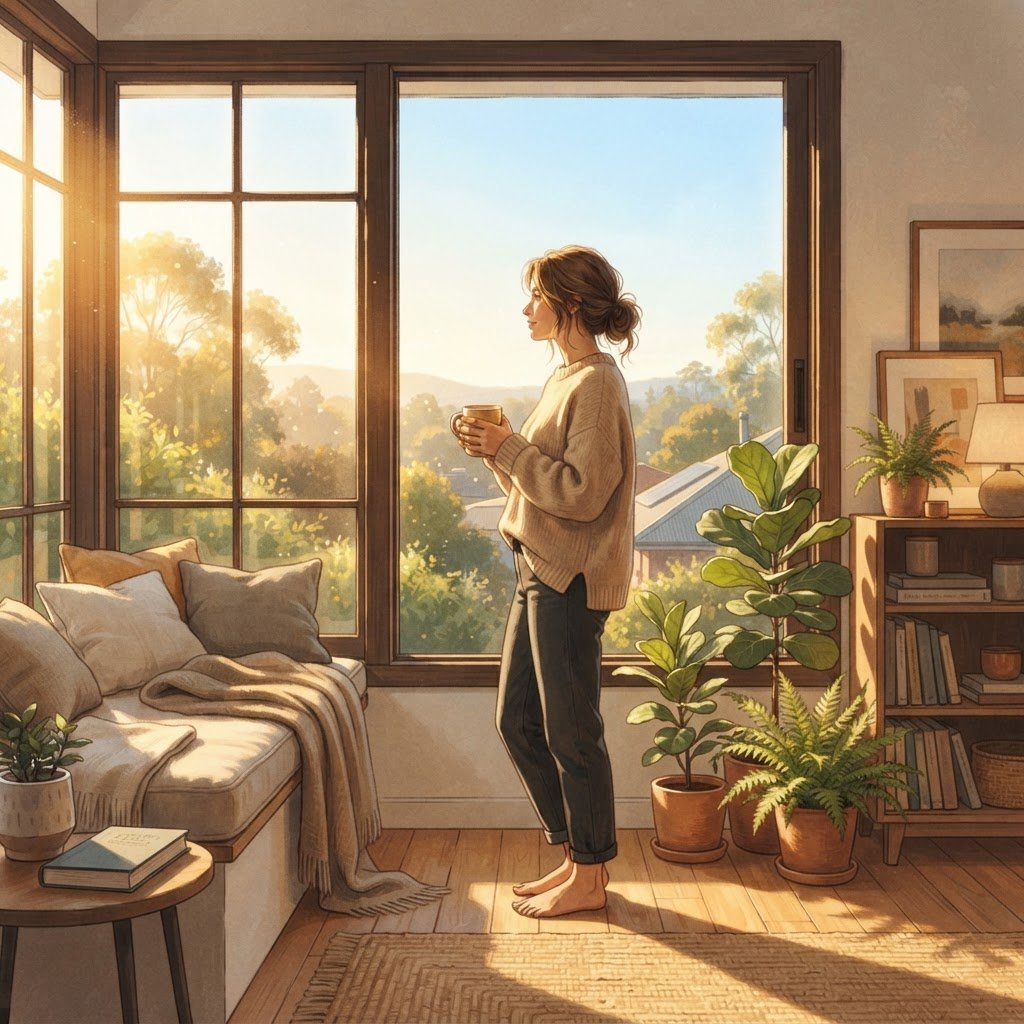
The first thing many people now do upon waking is not check a phone. It is not make coffee or switch on a light. It is, increasingly, simply to be near a window. To stand in whatever pale early light is available and let the morning arrive through the eyes rather than through a screen. It sounds almost too simple to be a trend, and yet across homes and routines and morning conversations, a quiet shift is taking place. People are redesigning their days around natural light, and the reasons go deeper than aesthetics.
For most of human history, daily life was governed by the sun. Waking and sleeping, working and resting, eating and gathering. All of it followed a rhythm set by available light. The invention of electric lighting was one of the great liberations of modernity, freeing activity from the constraints of daylight and extending productive hours well into the night. But that freedom came with a cost that has only become apparent in recent years. The body, it turns out, never stopped listening to the light.
The science is now well established. The human circadian rhythm, the internal clock that regulates sleep, hormone production, body temperature, and metabolism, is calibrated primarily by light exposure. Specialised cells in the eye, distinct from those used for vision, detect light intensity and send signals to the suprachiasmatic nucleus, a small region of the brain that acts as the master clock. When these cells receive bright light in the morning, they set a cascade in motion. Cortisol rises, alertness increases, and the body prepares for the day. When light diminishes in the evening, melatonin production begins, and the body winds toward sleep.
The problem with modern life is that this system is constantly confused. Indoor lighting, even in well-lit offices, is typically far dimmer than natural daylight. A person might wake in a dark bedroom, commute in a dim train or car, spend the day under artificial lights that are a fraction of the intensity of outdoor light, and then spend the evening bathed in the blue glow of screens. The circadian system, designed to distinguish clearly between day and night, receives instead a muddy, undifferentiated signal. The result is poor sleep, daytime sluggishness, and a vague but persistent sense of being out of sync.
This is where the natural light movement begins. Not as a wellness fad or a design preference, but as a correction. People are realising that something as simple as when and how they encounter light can have profound effects on how they feel, how they sleep, and how they function throughout the day. And they are making changes, some small and some significant, to bring their routines back into alignment with the sun.
The most visible change is in morning routines. Getting outside within the first hour of waking has become a cornerstone practice for a growing number of people. It does not require a long walk or a workout. Simply standing outside for ten or fifteen minutes, letting the eyes take in the full spectrum and intensity of morning light, is enough to signal to the brain that the day has begun. On overcast days, the outdoor light is still significantly brighter than indoor lighting, and the effect is still meaningful. Some people have taken to having their morning coffee on the balcony or in the garden. Others have built a short walk into the start of their day, not for exercise but for light.
For those who wake before the sun, particularly during winter months, light therapy lamps have become a popular tool. These devices, which mimic the intensity and spectrum of natural daylight, can provide the morning signal that the sky has not yet delivered. Used for twenty to thirty minutes shortly after waking, they help anchor the circadian rhythm and combat the sluggishness that often accompanies dark mornings. They are not a substitute for real sunlight, but they bridge the gap until it arrives.
The attention to light extends beyond the morning. Throughout the day, people are becoming more intentional about where they sit and work. Proximity to windows has become a sought-after feature in home offices and workplaces alike. Desks are being repositioned to catch morning or midday sun. Some remote workers have developed the habit of following the light through their homes, moving from room to room as the sun shifts, turning their living space into a kind of sundial. The goal is not just brightness but the quality of light that only comes from the sky.
Evening routines are changing too, in the opposite direction. Just as morning light signals the start of the day, diminishing light signals its end. People are dimming their household lights in the hours before bed, switching off overhead fixtures in favour of warm, low-level lamps. Screens are being set aside earlier, or at least fitted with warmer colour settings that reduce blue light exposure. The goal is to recreate, as much as possible within a modern home, the gradual dimming that the natural world provides at dusk. It is a simple practice with a tangible reward: easier sleep and deeper rest.
The design of homes is responding to this shift as well. Renovation projects increasingly prioritise larger windows, skylights, and open floor plans that allow light to penetrate deep into interior spaces. Sheer curtains are replacing heavy drapes in rooms where people spend their mornings. Glass doors and internal windows are being used to borrow light from brighter rooms and distribute it through darker ones. The aesthetic appeal of light-filled spaces has always been recognised, but now it carries a functional weight. A well-lit home is not just beautiful. It is, in a very real sense, healthier to live in.
There is a social dimension to this movement as well. Light-oriented routines often involve going outside, and going outside often means encountering neighbours, feeling the weather, being part of the physical world in a way that indoor life precludes. The person who walks in the morning is not only getting light. They are getting movement, fresh air, and a moment of connection with their surroundings that a screen can never provide. The natural light habit, seemingly small, tends to pull other healthy behaviours along with it.
The workplace is beginning to catch on. Some forward-thinking offices have started adjusting their lighting to follow a circadian-friendly pattern throughout the day. Bright, cool-toned light in the morning to promote alertness, gradually shifting to warmer, dimmer tones as the afternoon progresses. The intention is to support the natural rhythm of the people working inside, rather than fighting it with uniform artificial light from morning to evening. Early reports from these environments suggest improvements in focus, mood, and even afternoon energy levels. It is a relatively simple intervention with surprisingly wide-ranging effects.
The contrast with the typical office environment could not be starker. Fluorescent panels buzzing overhead from the moment someone arrives to the moment they leave, emitting the same flat, blue-white glow regardless of the time of day. The body reads this as perpetual midday, which might seem beneficial for alertness but actually confuses the system. By late afternoon, the mismatch between what the eyes are telling the brain and what the body actually needs produces that familiar slump, the one that sends people to the coffee machine or the vending drawer at three o’clock. Better lighting would not eliminate the slump entirely, but it would reduce its severity and duration.
Skepticism is fair. It is reasonable to wonder whether something as basic as light exposure can really make a meaningful difference to how people feel and function. But the evidence is compelling enough that it has moved beyond the wellness fringe and into mainstream medical advice. Sleep specialists now routinely discuss light hygiene with patients. Mental health professionals have taken note of the link between light exposure and mood, particularly in the context of seasonal affective disorder. The advice is no longer esoteric. Get morning light. Reduce evening light. Let the sun set your clock.
What is perhaps most striking about this trend is its accessibility. Unlike so many wellness practices that require equipment, memberships, or specialised knowledge, light is free and universally available. The barrier to entry is a door and a willingness to open it. There is no app to download, no subscription to maintain, no protocol to follow beyond stepping outside and looking around. In a wellness culture that has become increasingly commercialised and complex, the return to natural light feels almost radical in its simplicity.
That simplicity may also be its strength. The routines that endure are the ones that fit easily into a life, that do not demand willpower or resources, and that produce results quickly enough to reinforce the habit. Morning light delivers. Stand outside for a week, pay attention to how the body responds, and the effect becomes its own argument. Better energy in the day. Easier sleep at night. A sense of being anchored to something real and reliable, a rhythm that has governed human life for millennia and still works, if only it is allowed to.
The sun, it turns out, was always a better alarm clock than the one on the nightstand. People are simply remembering that now.




